Green Tiger Beetles
-
 PXL_20250603_170112082_exported_5684
-
 PXL_20250603_170136209_exported_11838
-
 PXL_20250603_170136209_exported_12772
-
 PXL_20250603_170136209_exported_25011
-
 PXL_20250603_170136209_exported_27078
-
 PXL_20250603_170136209_exported_30680
-
 PXL_20250603_170136209_exported_31213
-
 PXL_20250603_170136209_exported_6569
Scientific Classification #
| Rank | Classification |
|---|---|
| Kingdom | Animalia |
| Phylum | Arthropoda |
| Class | Insecta |
| Order | Coleoptera (Beetles) |
| Suborder | Adephaga |
| Family | Carabidae (Ground beetle) [Note: Historically Cicindelidae] |
| Subfamily | Cicindelinae (Tiger beetles) |
| Genus | Cicindela (Common tiger beetles) |
| Species | C. sexguttata (Six-spotted tiger beetle) |
Overview #
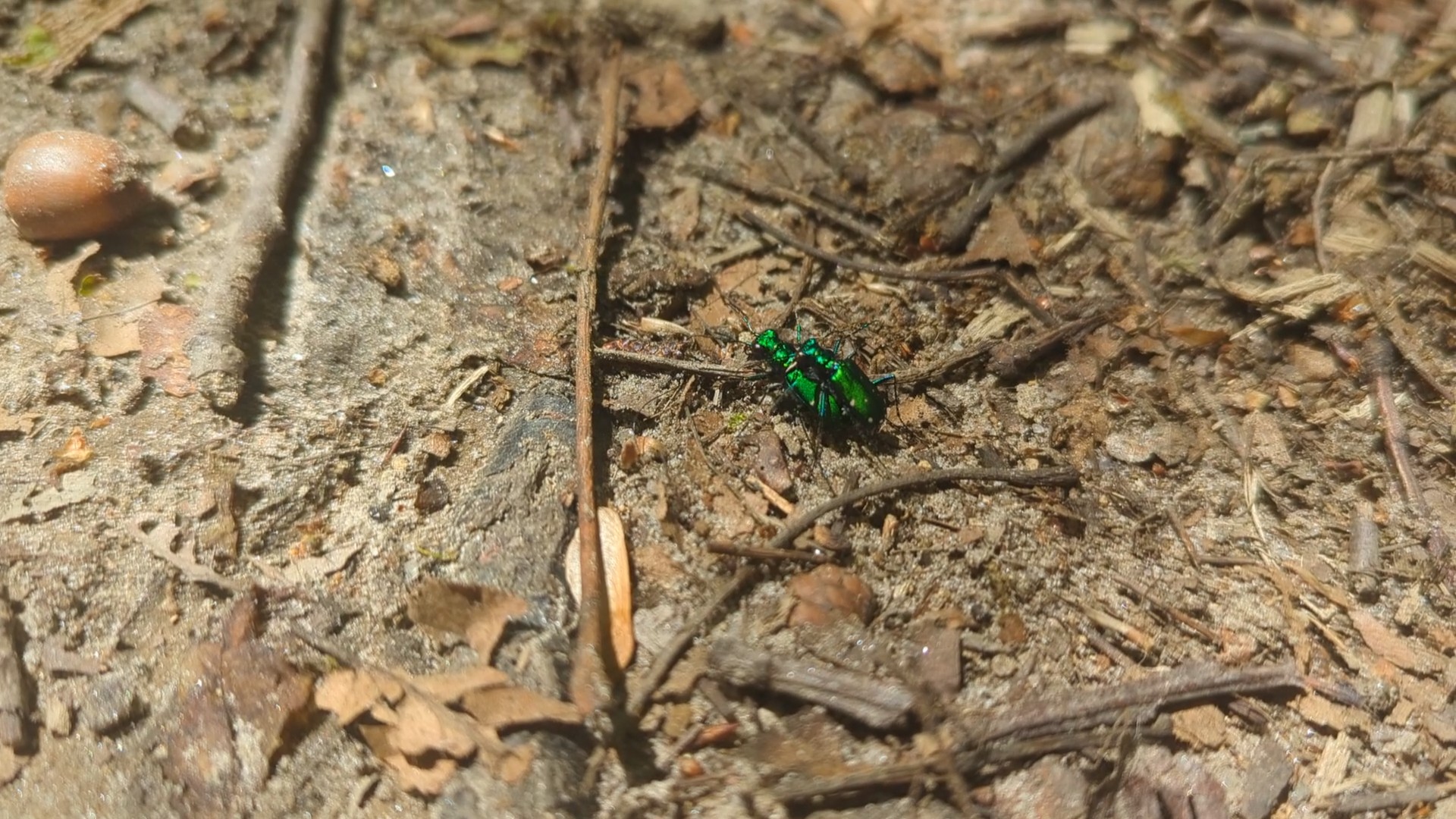
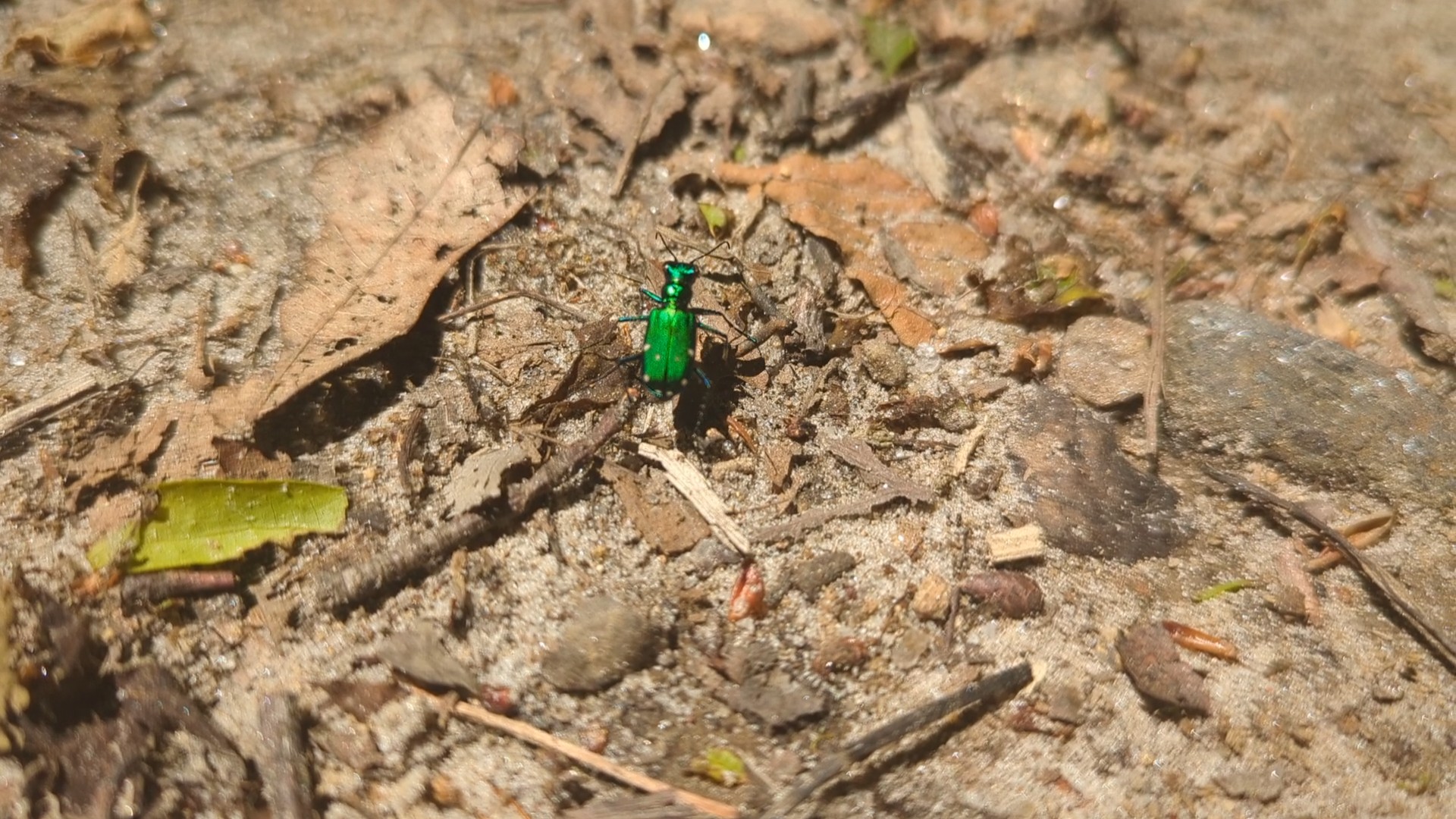
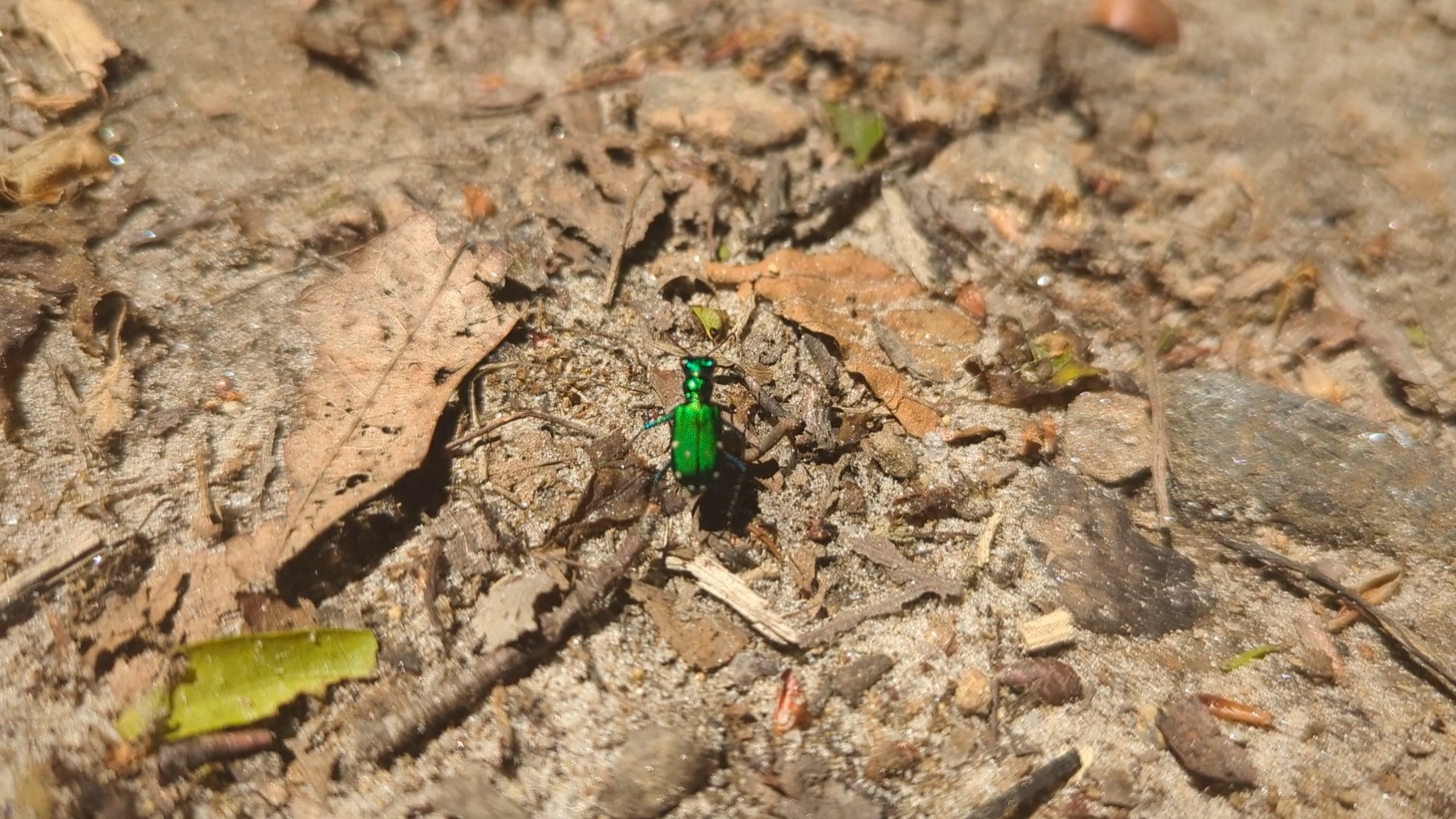
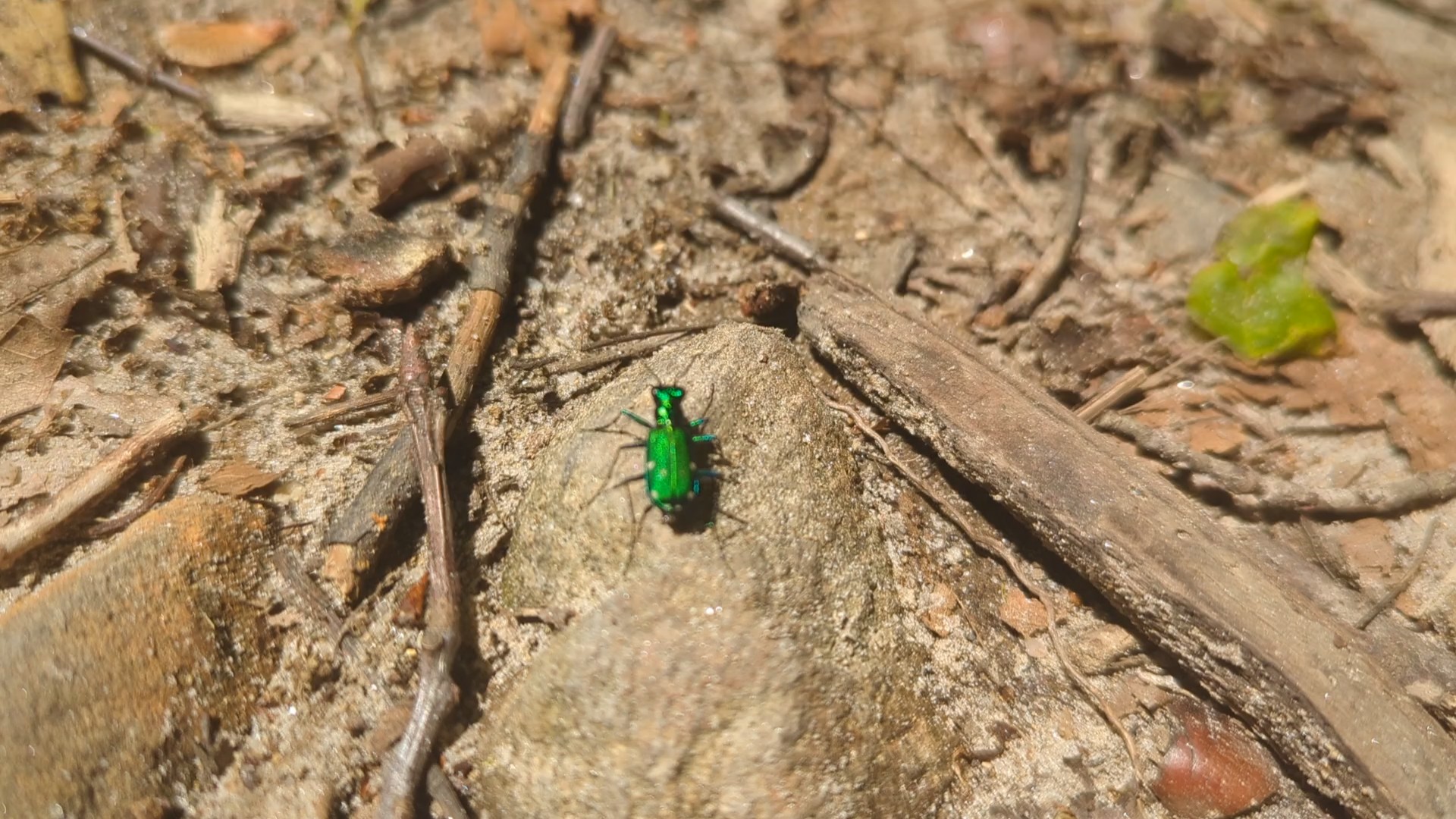
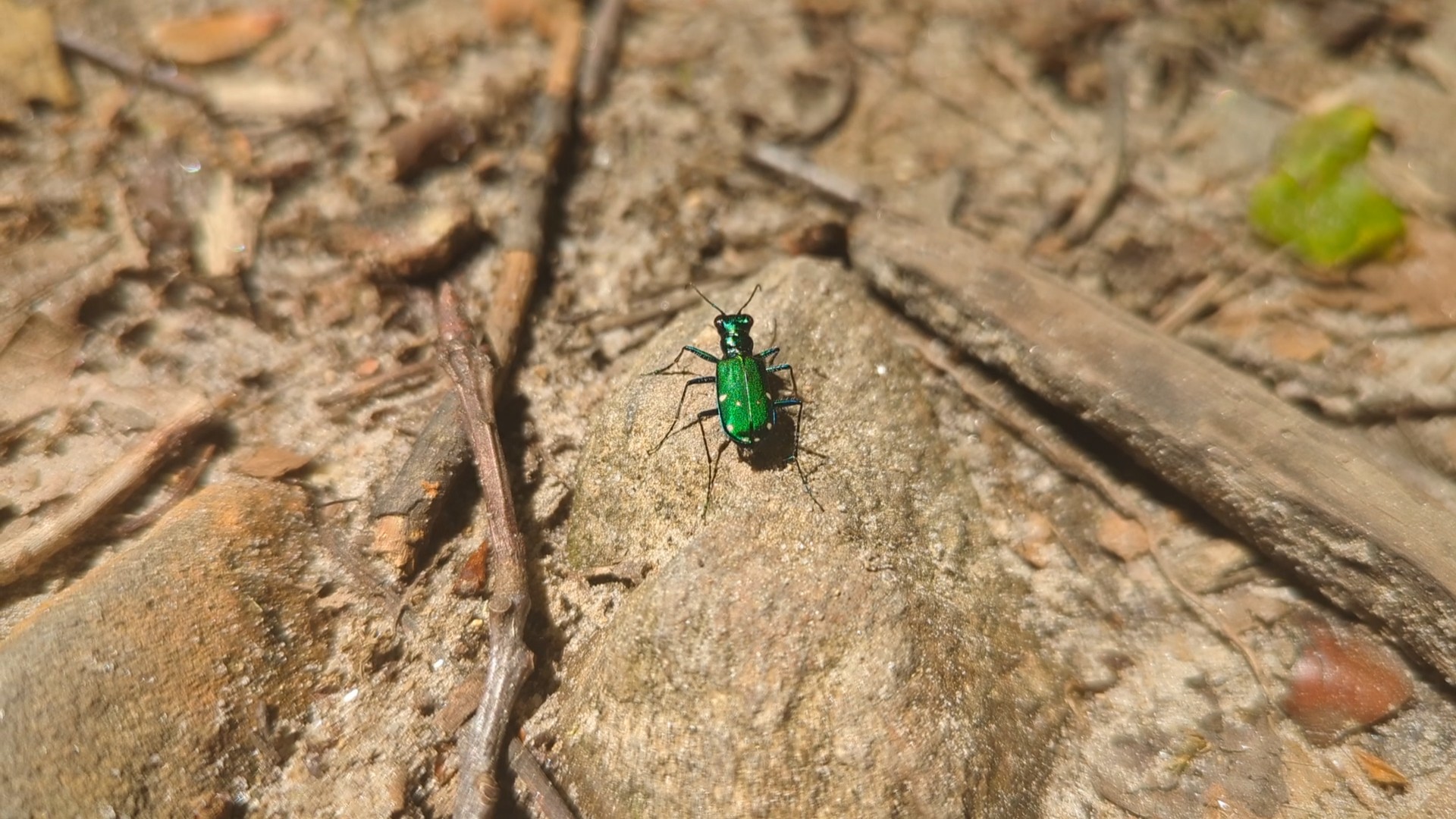
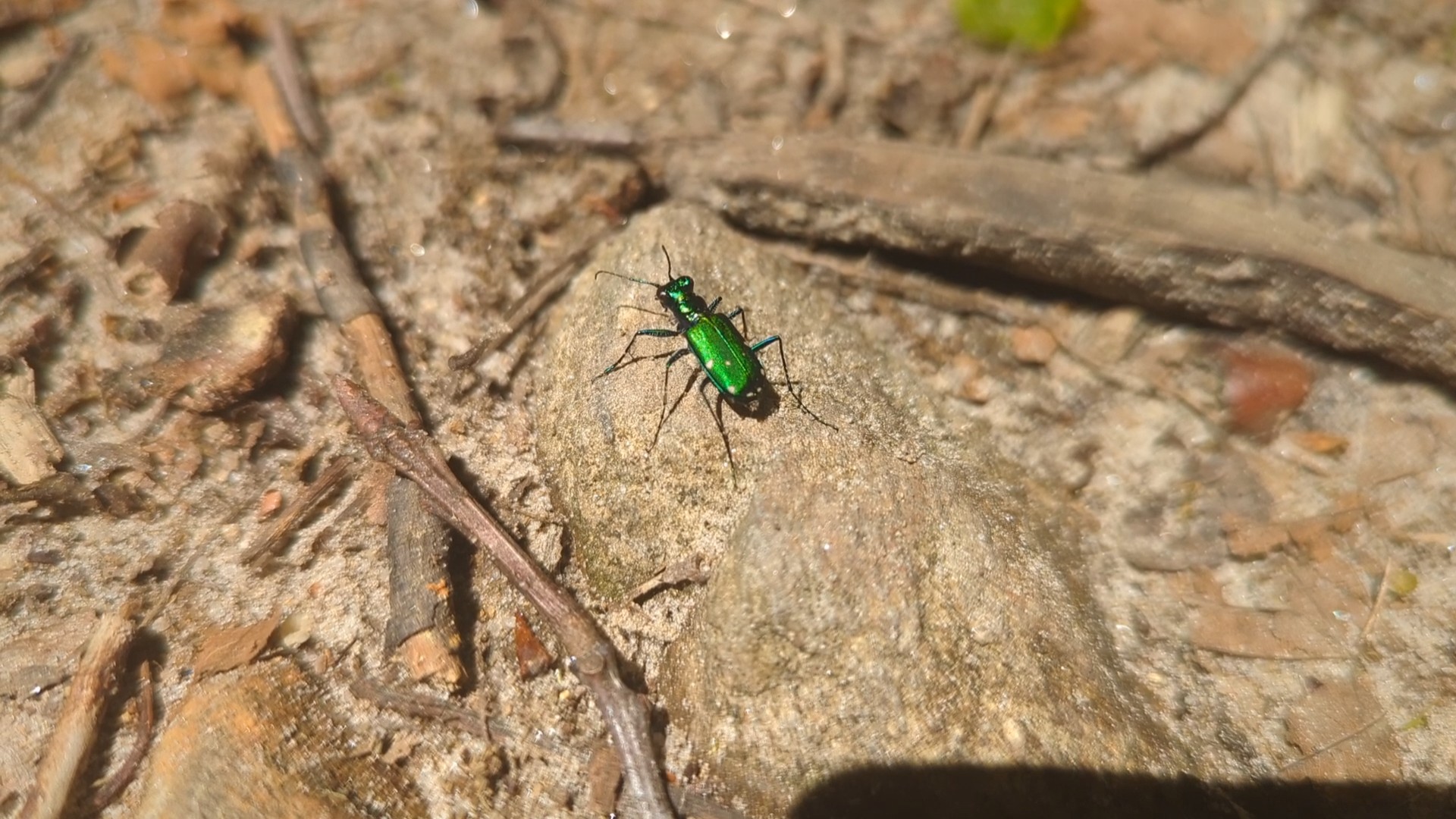
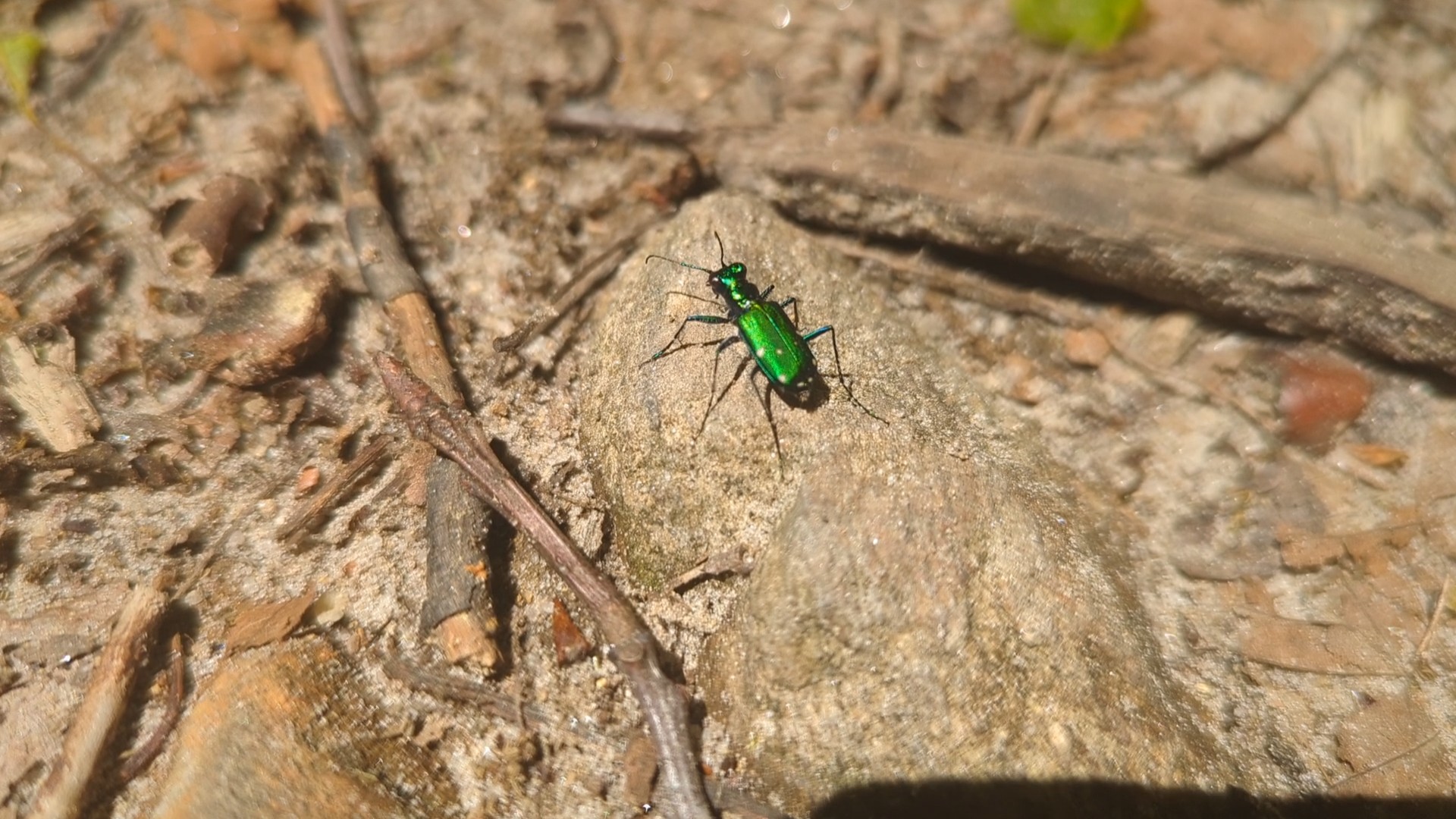
The six-spotted tiger beetle, also known as the six-spotted green tiger beetle, is a common and well-known species recognized for its brilliant metallic green to blue-green coloration. These beetles are fast-moving predators celebrated for their impressive hunting abilities and distinct flight patterns. While their large mandibles give them a ferocious appearance, they are harmless to humans and generally do not bite unless they are handled.
Physical Description #
Adults typically measure 12-14 mm (1/2-5/8”) in length and possess long legs designed for speed. Their most identifying features include:
- Overlapping White Mandibles: These large mouthparts are easily recognizable and used for capturing prey.
- Elytra Spots: The common name refers to the six small white spots found on the beetle’s wing covers (elytra). However, some individuals may have more spots, fewer spots, or none at all due to genetic variation.
Habitat and Distribution #
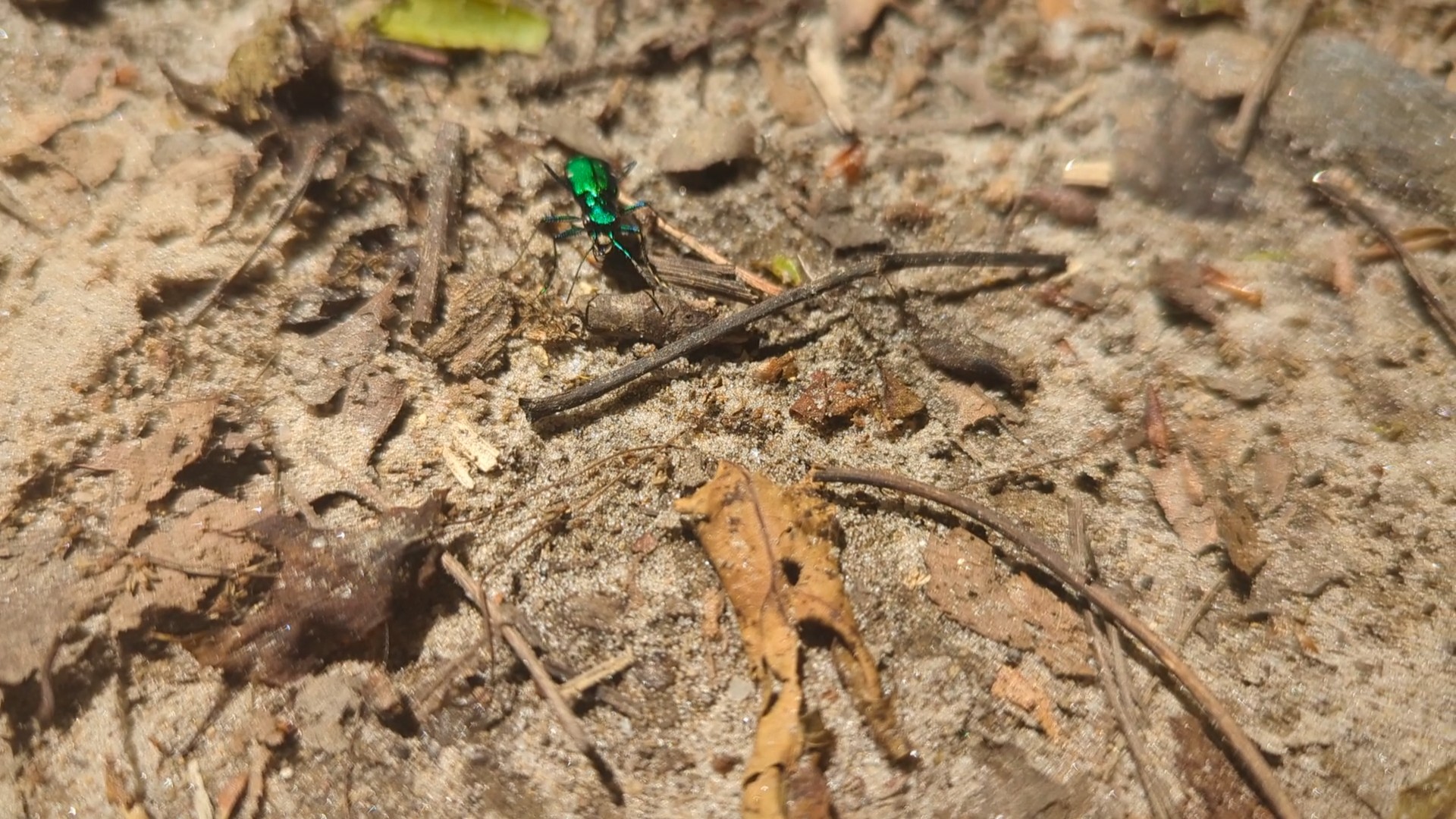
These beetles are widely distributed across eastern and central North America, ranging from Minnesota and southeastern Canada south to eastern Texas. They are primarily associated with deciduous forests. Within these woods, they are frequently spotted in sunlit patches clear of undergrowth, such as dirt paths and fallen logs, which serve as their primary hunting grounds.
Diet and Predatory Behavior #
Both the adults and larvae are voracious predators of small arthropods.
- Adults: Actively hunt and consume caterpillars, ants, spiders, and various other insects.
- Larvae: Live in burrows in the ground, typically in sandy patches. They lie in wait at the entrance and lunge out to ambush prey that passes by.
Life Cycle #
The six-spotted tiger beetle typically has a life cycle spanning 2-3 years. Females lay eggs in sandy soil, and the larvae hatch and develop underground for 1-2 years before pupating. Adults typically emerge in the spring (or sometimes autumn) and are active for a single season (roughly 6-8 weeks) to mate and hunt before dying.
Conservation Status #
As of 2026, this species is has been ranked as Secure by NatureServe.